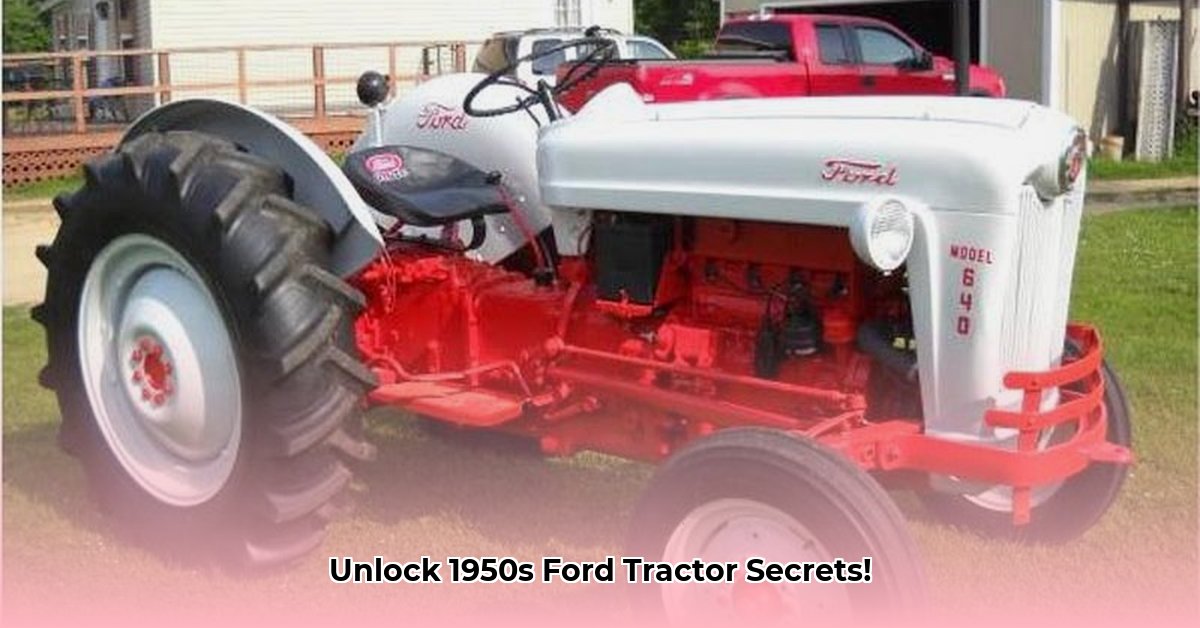
600 Ford Tractor Data: Unlocking the Secrets of a Farming Icon
The Ford 600 series tractors, particularly the popular 640 model, represent a pivotal moment in agricultural history. These weren't simply machines; they were the workhorses that reshaped farming practices in the 1950s. But what exactly made them so impactful? This article delves into the technical specifications, market performance, and lasting legacy of the Ford 600, exploring both its strengths and limitations. We'll uncover the secrets behind this iconic piece of agricultural machinery. For more detailed specifications, see this helpful resource.
Power Under the Hood: A Workhorse's Might
Determining the precise horsepower of the Ford 600 is surprisingly complex. While some sources cite a peak engine horsepower of 33.3, others suggest a lower drawbar horsepower (the power used for pulling implements) closer to 28.59. This discrepancy likely stems from variations in testing methodologies prevalent at the time. Regardless of the exact figure, the Ford 640 undeniably delivered substantial power for its era. How did this relatively modest horsepower translate into real-world farming efficiency? That's a question worth exploring further. The 640's Power Take-Off (PTO) horsepower (power for running attached equipment) and belt horsepower (power for belt-driven implements) remain partly elusive, further emphasizing the need for deeper research into this iconic tractor.
Shifting Gears and Hydraulics: A Farmer's Perspective
The Ford 640 boasted a four-speed unsynchronized transmission. This means shifting gears required skill and a "feel" for the machine, unlike the smooth shifting of modern transmissions. Coupled with a relatively small 2.25-gallon hydraulic system, the tractor's mechanics presented a challenge to modern farmers, but it was, undoubtedly, state-of-the-art for its time. What innovative techniques did farmers develop to compensate for these limitations? This aspect of the 640's story showcases the ingenuity of farmers adapting their methods to the tools at hand.
Market Success and Production: A Popular Choice
Precise sales figures for the entire 600 series remain elusive. However, the strong production run of the 640 model, from its introduction in 1954 to its discontinuation in 1957, indicates significant market appeal. Did the tractor’s robust engine, combined with other features, make it a standout choice among farmers? What set it apart from competitors like John Deere and International Harvester? Answering these questions requires further investigation into contemporary sales records and marketing materials.
The Missing Pieces: A Call for Further Research
A significant challenge in fully understanding the Ford 600 lies in the incompleteness of available data. Many sources lack crucial specifications, such as precise transmission details or fuel type. This underscores the vital importance of preserving agricultural machinery history. Where can we find more information? We suggest exploring online forums, university and agricultural college archives, museums, and private collectors – all potential treasure troves of previously lost tractor data.
Where to Find More Information: A Treasure Hunt
Unlocking the complete story of the Ford 600 requires a multi-pronged approach:
- Online Communities: Engage with enthusiasts and experts on dedicated vintage tractor websites and forums.
- Libraries and Archives: Delve into the archives of universities, agricultural colleges, and historical societies.
- Museums: Visit museums showcasing preserved Ford 600 models to learn from their exhibits and staff.
- Private Collectors: Connect with individuals who own and restore Ford 600 tractors; their firsthand experience is invaluable.
These resources offer potential breakthroughs into the mysteries surrounding this iconic farm machine.
A Lasting Legacy: More Than Just a Machine
Despite its limitations by today's standards, the Ford 600 series played a crucial role in shaping American agriculture. Its study illuminates the technological advancements of the past half-century and the ingenuity and adaptations of both farmers and engineers. The Ford 600 stands as more than a machine; it symbolizes an era and a pivotal step in agricultural history.
How to Restore a Ford 640 Tractor Engine: A Deep Dive into the 1950s Workhorse
Key Takeaways:
- Restoring a Ford 600/640 engine presents unique challenges.
- Common issues include fuel system problems and electrical system failures.
- A methodical, step-by-step approach to troubleshooting is essential.
- Community knowledge and professional advice are invaluable resources.
- Responsible fluid disposal is crucial for environmental protection.
Understanding the Beast: Ford 600/640 Engine Anatomy
Before starting a restoration, understand the engine itself. Challenges often arise in the fuel system (vapor lock, clogged filters, carburetor issues) and the 6-volt electrical system (corrosion, worn components). Thoroughness and patience are key.
Troubleshooting: A Systematic Approach
Consider the engine a puzzle. A methodical approach is essential:
- Basic Checks: Battery, ignition, fuel level and quality. (Use non-ethanol fuel).
- Fuel System: Inspect filter, lines, and carburetor. Is fuel flowing freely?
- Electrical System: Use a multimeter to check battery, solenoid, and wiring. Look for corrosion.
- Internal Engine: If the crank is slow, check compression; worn valves or rings may be the culprit.
- Professional Help: Consult a mechanic if needed.
Parts Sourcing: Original vs. Aftermarket
Original parts are superior but expensive and hard to find; aftermarket parts are more readily available but quality varies.
The Restoration Process: Step-by-Step
Restoration is a process, not a race. Follow these steps:
- Disassembly: Carefully disassemble, documenting each step with photos.
- Cleaning: Thoroughly clean all parts using appropriate solvents.
- Inspection and Repair: Inspect for wear and tear, replacing worn components.
- Reassembly: Reassemble following your documentation, ensuring proper bolt tightening.
- Testing: Test the engine after reassembly.
Environmental Responsibility: Fluid Disposal
Dispose of engine fluids responsibly, adhering to local regulations.
Leveraging Community Knowledge
Online forums, such as MyTractorForum, offer invaluable insights and support from experienced restorers. [This article is informed by countless hours spent in tractor repair shops and forums, including discussions on the MyTractorForum website.]1
https://www.mytractorforum.com/threads/640-ford-restoration.448065/ ↩